Dr. Carol B. Low, licensed clinical psychologist
offers useful self-help tips, advice, and comment
on the world from a psychological point of view.
Individual psychotherapy,
video-chat, and intensive therapy.
Now open in Ashland, OR | 916-936-2325
Monday, May 4, 2020
Of Illnesses and Panics
Each of us must choose whom to believe, how much to read, and how to respond. We must weigh logic and emotion, time and trust. Everything is in motion.
I saw a joke calling it "Schrodinger's virus"--you have to act both as if you have it (isolate and wear a mask) and as if you don't (go shopping for yourself and others, stay home because you are not immune) . If you might have it, you also might not be able to get treatment nor a test, but you are supposed to go home rather than to the doctor or emergency room. What's not to love? You can easily feel confused, anxious, and threatened.
Tuesday, July 16, 2013
The Pain, You See, Is in the Brain
You know you are not faking, but you are really confused: why do the standard treatments not work very well? And when are you finally gong to get a decent night's sleep?
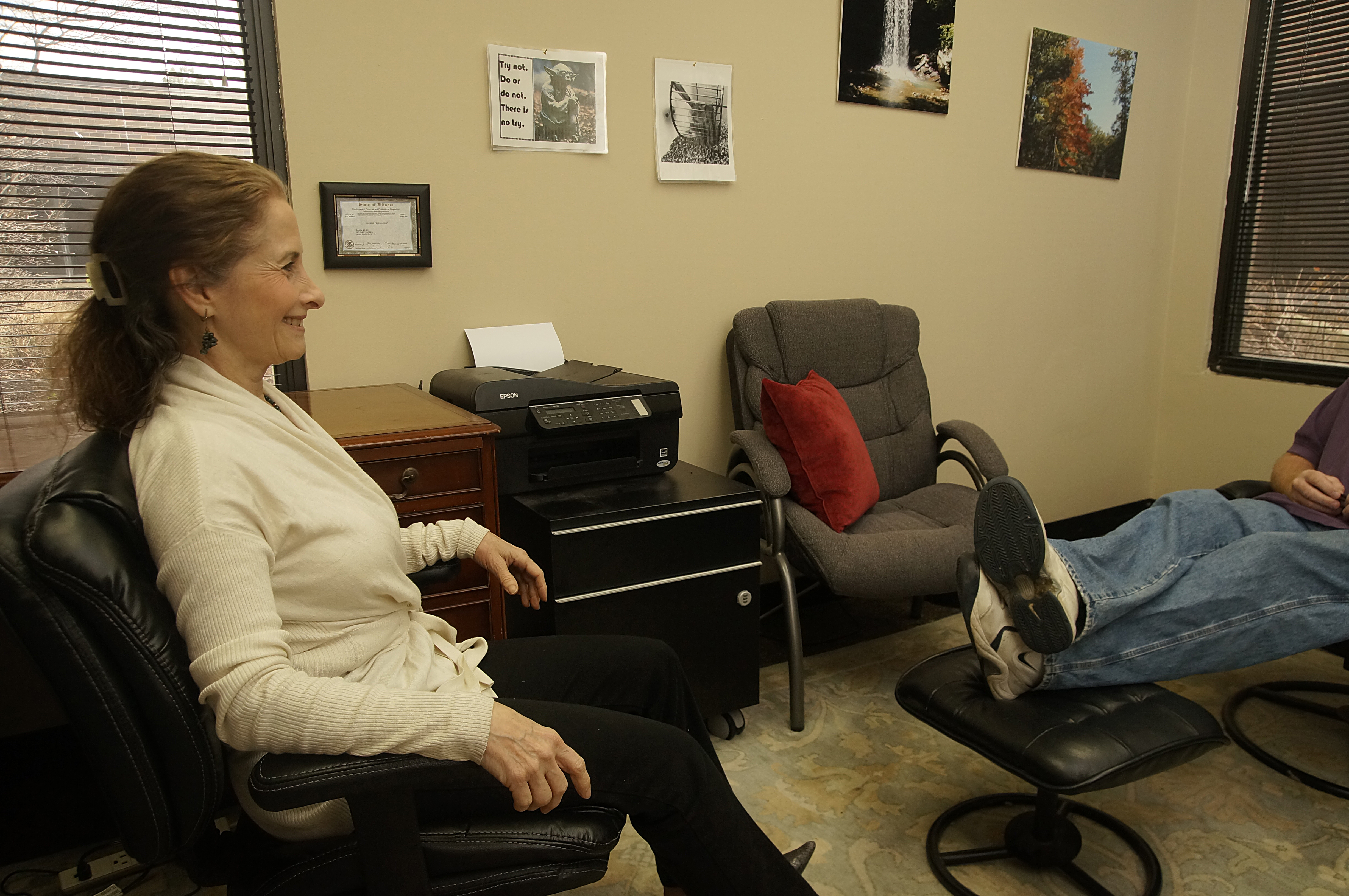
I shall start at the beginning and work my way around to your question. Pain is a signal from the brain to the body to stop doing what it is doing because something is wrong. Most of the time, this is a good system. You do not walk on a broken leg until it is set. You take your hand off the hot stove and treat the burn. You go to the doctor when your stomach hurts and find out why. Pain tells you something is off and you get it taken care of.
A grey area exists after you have gotten treatment or discovered why you have a headache. The pain persists to remind you to be careful. Most of the time this is useful--you do not want to re-injure yourself nor do you want to overdo something after surgery. On the other hand, these are things you can figure out on your own and perhaps get help to minimize the pain. That is why it is ok to take pain medications after you have had the issue diagnosed and especially after it has been treated, but has not fully resolved.
So far, so good. But your pain, you say, has been treated, and nothing more is wrong that a doctor can discern, but it has not at all gone away. This is where that referral for psychology comes in. NOT because "it is all in your head", but because it is all in your head! To be clear, all pain comes from your brain, right? But if the pain in the brain did not subside with proper treatment, then the brain is signalling something is still wrong. Now the something is more difficult to discern, because the causal link is not clear. A broken leg gives you leg pain. This pain might be in your leg, your back, or your shoulder, but apparently that does not mean you have a problem in your leg, back, or shoulder this time.
Wednesday, January 9, 2013
Exciting news: New Article Published
I had the pleasure of working with Irving Kirsch, PhD on an article for the American Journal of Clinical Hypnosis on a pet topic of mine-- why psychotherapy is superior to medication in the treatment of depression. Dr. Kirsch has been the author of many meta-analyses (taking the results of various research studies and combining them to increase the effect size and draw general conclusions)( The Emperor's New Drugs , Irving Kirsch: Deja Vu all Over Again , Listening to Prozac and Hearing Placebo).
The conclusion of these many studies continues to be that antidepressant medications involve a high risk of side effects with little potential for gain, while psychotherapy, including psychotherapy using clinical hypnosis, is safer and more effective. I enjoying being part of the following article and offer it for your edification:
Suggestion in the Treatment of Depression
Irving Kirsch, Carol B. Low
American Journal of Clinical Hypnosis
Vol. 55, Iss. 3, 2013 221-229.
Abstract
Meta-analyses consistently reveal that most of the response to antidepressant treatment can be obtained by placebo, and the difference between response to the drug and the response to any treatment is not clinically significant for most individuals diagnosed with major depressive disorder. Furthermore, the best predictor of antidepressant efficacy is the response to placebo during the so-called placebo run-in period. It can also be shown that a significant portion of the placebo effect is expectancy. These data thus indicate that suggestion is a central factor in treating depression. Therefore, the use of hypnosis, which is based on suggestion, as a treatment adjunct can be expected to enhance treatment outcome.
Happy New Year--we can help you enhance your mood: call 630-249-9183 or write Dr. Low today.
Friday, November 11, 2011
End the Dieting YoYo: Holistic Weight Loss
When you seek to lose weight, it is important to think of the long term. You might be losing weight for a special event, but the idea is to maintain your new shape, not bounce back to the old one the very next week. If you go on some sort of special "diet" in which you deprive your body of nutrients to lose pounds fast, you may indeed succeed at losing those pounds, but as soon as you return to eating adequately, you will likely put them back on.
The same, of course, applies to exercise. If you exercise fanatically to lose some weight, adding increased calorie burn to your reduced caloric intake, you are likely to lose weight. ...and likely to put it back on when you return to a more sustainable lifestyle.
Ideally, to lose weight and keep it off, we need to eat enough to sustain a slightly reduced body size. We need to exercise more, both to increase the metabolism and build muscle, not just to burn calories. Burning calories makes you hungry and less likely to continue your fat loss program. We have all been there, surrendering to starvation before we reach our goal and, feeling defeated, giving up the whole project in disgust.
So how do we do this? Create a diet plan for life--learn to eat for your body's needs: eat adequately to sustain your body and watch those nutrients--we tend to be hungry when we are not getting enough nutrition even if we ARE getting adequate calories! Which is why we seem to be able to consume enormous quantities of non-nutritive treats, but rather less of life-sustaining foods. It is harder to overeat steak than chips. It is also the case that a starving body craves fat, sugar, and salt--the nutrients that are scarce in nature. If your body feels starved, you will find yourself drawn to exactly the things you ought to avoid to lose weight! It turns out this is not a failure of will, but a built-in mechanism to avoid starvation in times of famine. Thus, consuming a nourishing diet is the first key to long-term fat loss.
Is late-night eating your nemesis? It is probable that you are starved for nutrients and your body is driving you to distraction when your sales-resistance is lowest. And late at night, what do we seek? Fast foods that are full of sugar, salt, and fat, of course. Eat right all day and you can win the fight against late-night eating.
Here is another fact: Modern humans exist in the first time in history when people can be malnourished and obese simultaneously. This is because we consume manufactured treats that reverse the trend of the natural scarcity of sugar, salt, and fat. These items, while inexpensive, are not nourishing, and lead to overconsuming and obesity. Even so-called "diet" products with artificial fats and sweeteners fail to help us trim down because they are non-nutritive and thus continue the tendency of the body to crave the real thing. The food industry knows what your body craves and generously manufactures a wide variety of such items to capitalize on your natural scarcity eating tendencies. Think before you consume.
In your new diet plan, arrange to eat FOR your day, not after. As with a machine, the human body works most efficiently when it is fed FOR what is has to do, not as you are winding down for the night. Research demonstrates that consuming the same number of calories per day late in the day versus early leads to weight gain. This means your mother was right--you need a good breakfast to start your day. It also means that eating a large, late dinner makes it tougher to lose weight and easier to gain. Additionally, breakfast cereals are better for livestock than humans. Humans do not do well on very high-carbohydrate starters. We need to train our bodies to use protein for sustained energy rather than carbs for high, short bursts of energy. Remember that high-carb consumption, after that nice burst of energy, leads to high insulin output and fat storage as well as the tendency to stress the pancreas and develop diabetes as we age.
When you begin to plan your exercise program, think about exercising both to raise your metabolism and to build muscle, a higher-calorie burning tissue than fat. This means do both aerobic and resistance exercises. See a trainer is you need help planning this program. Remember that exercise must be consistent to work--choose a program that you can sustain for the long haul, not one that you will become bored of after a week. And particularly not one that you hate! It is not a failure of will when you stop doing something you hate. You will stop exercising at some point unless you find a way to have fun at it.
Now you have some ideas of how to create a sustainable weight-control lifestyle. If you need a boost to get you started or to get you past a plateau or just to help you stay on track, clinical hypnosis might be the key. Clinical hypnosis has been shown to help individuals break bad eating habits, learn to control portion size, and maintain the motivation to change. Many of us who know what we should be doing to lose weight need some support and guidance to stay on track. Clinical hypnosis offers a self-empowering way to help you break through those barriers and lose that extra fat once and for all. When you come in for hypnosis, you are learning to tap into inner resources to find your own motivation and make long-lasting changes.
Wednesday, June 30, 2010
What is hypnosis?
So what is hypnosis? In simplest terms, it is a narrowing of the focus of attention. So that person on stage is attending only to the hypnotist. By choice--or else why did she raise her hand, right? A stage hypnotist carefully selects volunteers from those with raised hands by observing their degree of attentiveness as he speaks.
In the clinic this translates into a way to tap into powers of your mind that you do not use to their fullest potential. The power to change bad habits, to project a happier future, to reframe an unpleasant past event, to calm your immune or nervous system. Hypnosis is not magic and it is NOT me controlling you. It is you being guided to learn to use that deeper potential of you mind to help yourself.
In my office, hypnosis is most often taught in conjunction with rational-emotive or cognitive therapy for overcoming phobias, depression, anxiety, or bad eating habits.
Learn self-hypnosis as a way to carry the new learning with you always.
Can clinical hypnosis help you?
Call the Center at 630-249-1983 for a free consultation.
http://www.centerforconsciousliving.com/hypnosis
Wednesday, June 16, 2010
Holistic Psychology?
Many approaches to mental health rely upon what we call reductionism--the idea that the mind and the body are separate and can be treated separately. The whole idea that mental distress is cured by a pill falls into this category. In contrast, the holistic approach says that each individual is an indivisible whole and must be treated as such. Thus, a mental health issue such as depression is not a "mental illness", but an adaptation of some sort to the individual's current reality, and a whole picture needs to be formed of the individual in order to adequately treat the problem.
In the same way, physical ills are influenced by a variety of factors we call stressors. stressors can be internal or external, mental or physical. temporary or permanent. Even a cold is influenced by the weather and the state of your immune system, not just the exposure to a virus. Some illnesses are more multi-determined that others. Irritable bowel is more a disease of response to stressors than the flu, for example.
The holistic approach requires individual treatment planning and a collaborative relationship between professional and client, rather than a traditional doctor-patient relationship. In this regard, I often refer to myself as a teacher or even a tour guide. The client cures him- or herself--I lead the way. With this approach, you have a sense of control over your fate and gain mastery over the problem that was vexing you.
